Luiss Test Scoring: How +1 / -0.25 / 0 Works and What to Do About It
Two candidates with the same knowledge can get different Luiss Test scores. The difference is understanding the marking scheme. This guide does the math.
The scheme
From the Regolamento e guida for the online test, and Luiss's own FAQ:
- +1 per correct answer
- -0.25 per wrong answer
- 0 per blank answer (the platform accepts one option per question, so there is no multiple answer to worry about)
- The result is reported out of 100. Luiss does not publish how the 50-question raw score maps onto that scale, so nobody can convert reliably, including us
What is missing from the scheme matters too. Luiss publishes no minimum score for the regular sessions: its FAQ says admission follows the ranking by score, per degree course, until that course's places run out. Nor is there a school-grade component to cushion a weak day. The 2027/28 admission notice determines admission exclusively by the Luiss Test score, with a bonus only for Luiss Foundation Programme students, exactly as the 2026/27 notices did. Scoring strategy carries more weight here than in most admissions.
The math of guessing
Whether guessing pays depends on the number of answer options. Luiss's regulations say one answer must be selected per question and do not say how many options a question carries. Its free official practice paper is the best guide there is: most questions have four options, and two question types (the "belief" questions and the true / false / cannot-be-derived statements) have three. The expected value of a blind guess:
- 4 options: EV = (1/4)(+1) + (3/4)(-0.25) = +0.0625. Slightly positive.
- 3 options: EV = (1/3)(+1) + (2/3)(-0.25) = about +0.17.
Elimination changes this. Rule out one option and guess among the rest:
- 4 options, guessing among 3: EV = about +0.17
- 3 options, guessing between 2: EV = +0.375
The rule that follows:
If you can eliminate at least one option, answer. If you cannot eliminate anything, a blank is the safe choice: a blind guess is worth only a fraction of a point on average, and that rests on the real test using no more options than the practice paper, which Luiss does not promise. A blank never costs you points.
The common mistake is answering everything out of momentum. A run of pure guesses swings your score by whole points in either direction for well under a point of expected gain. Treat each unsure question as a quick elimination exercise, then decide.
Every mock is scored +1 / -0.25 / 0, so the answer-or-blank decision becomes routine before test day.
See the practice optionsThere is no number to clear
Luiss's FAQ is blunt about it: there is no fixed minimum score. Admission runs by ranking on the test score, one ranking per degree course, until the places for that course are gone. The one threshold Luiss does publish, 60/100, belongs to the anticipated test it runs for its Orientation 4 Summer School, a separate route with its own admission notice and its own rules.
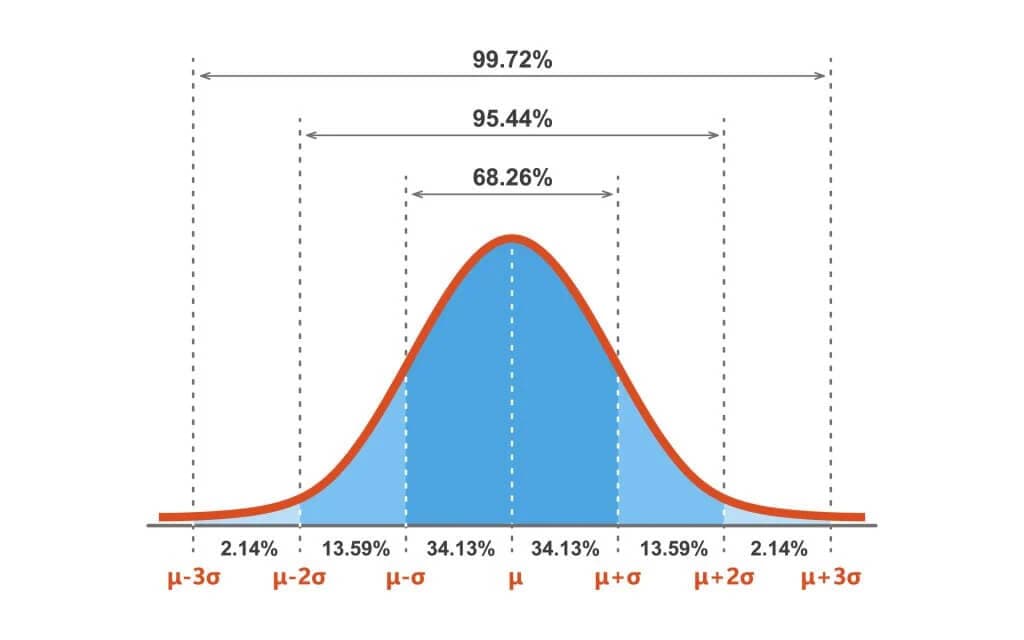
So the target is not a mark, it is a position. Popular courses fill from the top. See what score you actually need for the ranking logic and what applicants report.
Build your plan around answering every question you can genuinely work, protecting yourself on the rest, and seeing all 50 questions.
Pacing: you get one pass
The Regolamento e guida for the online test is explicit about navigation. It is sequential: you move forward with "Avanti", and once the page has changed you cannot go back, not to change an answer you gave and not to fill in one you left blank. If you page through the whole test without answering, the attempt still counts and you cannot ask to repeat it. Plan for that, because most test advice assumes a second pass you will not get.
75 minutes over 50 questions is 90 seconds each on average. A routine that survives forward-only navigation:
- Give the question its 90 seconds. If you have an answer, select it.
- If you do not, run the elimination rule on the spot: rule out at least one option and answer, or leave it blank on purpose.
- Decide before you move on. A blank is final, and so is a wrong answer you would have come back to.
- Use the "Navigazione test" panel for what it can actually do: time remaining, where you are in the test, and which questions you left blank. It is information, not a way back.
The most common self-inflicted loss is spending four minutes on one hard question. One question is one point, and those minutes are spent whether you get it or not. Four minutes is two or three easier questions you have not reached yet.
What you can and cannot repeat
One sitting per session, for one course. The 2027/28 admission notice allows a single sitting of the February test, for the one degree course you name, and that course is binding after 10 February 2027. If you are not admitted, the second session (applications by 10 May 2027) is open only for the courses that still have places. And no session gives you a second look at a question. That is what practice has to rehearse, under the real clock and the real scoring, before the day that counts.
Ranked on your test score, on a test whose navigation only moves forward: realistic practice is the whole game.
Built by the team behind DelftPrep: 500+ students prepared for university entrance tests.
Explore more
More Luiss Test guides

The Luiss Admission Test: Complete Guide (2027/28)
The Luiss Test explained in one place: the 50-question format, what psycho-aptitude questions are, the +1 / -0.25 / 0 scoring, forward-only navigation, English vs Italian, and the 2027/28 dates and fees.

Luiss Test Practice Material: What You Get, When, and How to Prepare Before It Arrives
Luiss's five official online mocks unlock after you register for the test, and one free practice paper is open to everyone. What the material is, how the mocks compare to the real test according to applicants, and how to prepare on your own timeline.
What Score Do You Need on the Luiss Test?
Luiss publishes no admission cutoffs and no minimum score: admission runs by ranking until each course's places are gone. How that works, what Luiss does publish, and how to set a realistic target.
Free Luiss Test study guide (PDF)
All the theory and the method in one 97-page PDF: the rule that you can only move forward, a 27-question diagnostic with solutions, logic, maths, numerical and verbal reasoning and reading worked through, the arithmetic of negative marking at -0.25, and sheets to print. We email you the download link.