Luiss vs Bocconi Admission Tests: What Actually Differs
Many applicants apply to both Luiss and Bocconi. The two tests look alike on the surface: 50 multiple-choice questions, 75 minutes, online, SAT-inspired. Below the surface they differ in ways that change how you should prepare. Here is the comparison, from both universities' official pages.
At a glance
| Luiss Test | Bocconi Online Test | |
|---|---|---|
| Format | 50 questions, 75 min | 50 questions, 75 min |
| Content | Logic, problem solving, maths, aptitude reasoning | Fixed mix: 24 Maths, 11 Reading, 9 Critical Thinking, 6 Numerical |
| Scoring | +1 / -0.25 / 0 | +1 / 0 / -0.2 (-0.33 on 3-option items) |
| Threshold | None published for the regular sessions | 17/50 minimum to be considered |
| Weight of test | The test drives the ranking* | 55%; school record is the other 45% |
| Attempts | One sitting per session; session 2 only for courses with places left | Up to 4 per year, 60 euros each |
| 2027/28 timing | Apply by 10 Feb 2027, test 22 to 26 Feb 2027 | Early: by 24 Sep 2026. Winter: by 21 Jan 2027 |
* Luiss has no school-record component: the 2027/28 admission notice, like the 2026/27 ones, ranks candidates on the Luiss Test score alone, and Luiss's FAQ describes the same shape, ranking by score per degree course until the places run out. Two published bonuses sit outside that, and neither reaches an ordinary regular-session candidate: +3 or +5 points for students of the Luiss Foundation Programme, and +5 or +10 points on the anticipated Orientation 4 Summer School test for candidates who passed the previous year's Orientation 3 test.
For what it is worth, applicants who have taken both describe them as similar in feel. One recent test-taker on a student forum called the Luiss Test "really similar to the Bocconi test".
The three differences that matter
1. Content: fixed subjects vs pure aptitude. Bocconi publishes an exact structure, and nearly half of it is Mathematics with a published syllabus. You can study topics. Luiss describes logical-reasoning, mathematical and psycho-aptitude questions and publishes no section breakdown and no section order for the real test, for 2027/28 or any recent cycle; its free practice paper mixes the question types together, some with three options. Even its one-sentence description has moved: mathematics was named from the 2026/27 cycle, having been absent the year before. You prepare question families instead: deductions, problem solving, numerical and verbal reasoning, plus maths. In short: Bocconi rewards a study plan, Luiss rewards pattern fluency and speed.
2. Stakes per sitting. Bocconi allows up to four attempts per test type per year and blends your score with your school record. At Luiss you get one sitting per session (the second session only reopens the courses with places left), the ranking rests on the test, and inside a sitting the navigation only moves forward: no marking a question to revisit, no second pass, no filling in a blank you left behind. This should change your approach: at Bocconi an early attempt is cheap information; at Luiss every question is decided once, so realistic practice has to do the rehearsing.
3. The penalty math. Both tests penalise wrong answers, at different rates: Luiss at -0.25 flat, Bocconi at -0.2 (with -0.33 on its 3-option Critical Thinking items). The decision rule is the same shape in both (eliminate at least one option before answering), but if you sit both tests, practise each under its own scheme. The full Luiss numbers are in our scoring guide.
You can do both, in sequence
For 2027/28 the calendars barely overlap. Bocconi's Early session ends by late September 2026 and Winter by late January 2027. The Luiss first session tests 22 to 26 February 2027. You can prepare for Bocconi, sit it, and then move to Luiss-specific preparation with weeks to spare. The overlap in question families (numerical reasoning, logic, maths fundamentals) means the first preparation carries over.
If Bocconi is also on your list, our sister site covers that test the same way: bocconiprep.it.
2,000+ questions across the families the Luiss Test draws on, full-length 50-question mocks, and +1 / -0.25 / 0 scoring on everything.
Compare the prep options →Which to prioritise
Choose by program fit, not by test difficulty. But let the rules shape your effort: Bocconi's 55/45 weighting means a strong school record buys slack on the test; at Luiss the 2027/28 notice puts nothing but the test score in the formula, so nothing buys slack. The preparation that transfers between them, timed practice, elimination discipline and pacing, is the part worth starting first either way.
Ranked on your test score, on a test whose navigation only moves forward: realistic practice is the whole game.
Built by the team behind DelftPrep: 500+ students prepared for university entrance tests.
Explore more
More Luiss Test guides

The Luiss Admission Test: Complete Guide (2027/28)
The Luiss Test explained in one place: the 50-question format, what psycho-aptitude questions are, the +1 / -0.25 / 0 scoring, forward-only navigation, English vs Italian, and the 2027/28 dates and fees.

Luiss Test Practice Material: What You Get, When, and How to Prepare Before It Arrives
Luiss's five official online mocks unlock after you register for the test, and one free practice paper is open to everyone. What the material is, how the mocks compare to the real test according to applicants, and how to prepare on your own timeline.
What Score Do You Need on the Luiss Test?
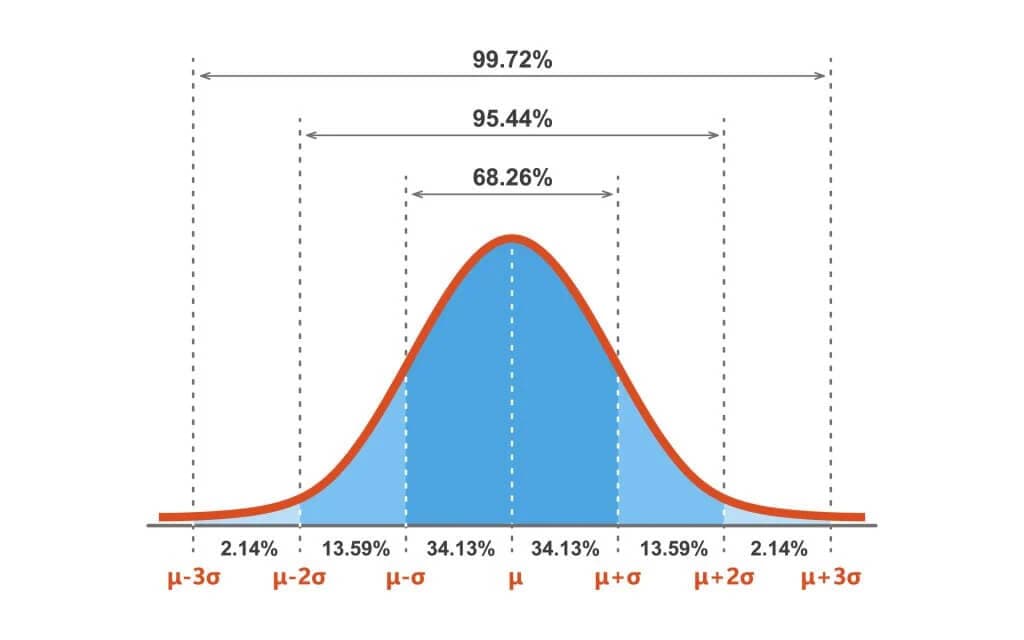
Luiss publishes no admission cutoffs and no minimum score: admission runs by ranking until each course's places are gone. How that works, what Luiss does publish, and how to set a realistic target.
Free Luiss Test study guide (PDF)
All the theory and the method in one 97-page PDF: the rule that you can only move forward, a 27-question diagnostic with solutions, logic, maths, numerical and verbal reasoning and reading worked through, the arithmetic of negative marking at -0.25, and sheets to print. We email you the download link.